Popcorn and Pixels: Why Losing the Movie Theater Could Cost Filmmakers Everything
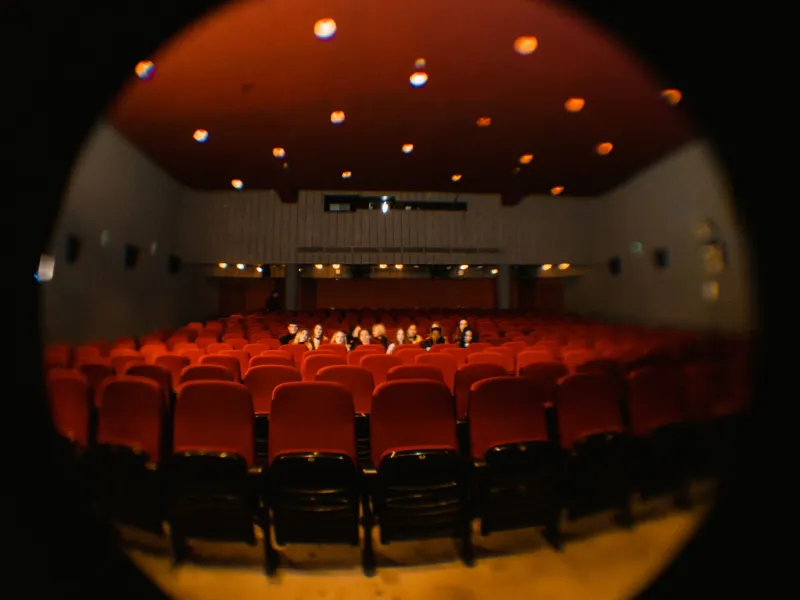
There's something almost ritualistic about going to the movies. The dimming lights, the smell of overpriced popcorn, the collective gasp of a packed house when the plot twists in a direction nobody saw coming. For more than a hundred years, that shared experience has been the beating heart of cinema. But these days, a growing number of people are watching the latest releases curled up on a couch in sweatpants—and the studios are perfectly fine with that. Maybe too fine with it.
Here at TrueMovie2U, we love a good streaming binge as much as anyone. But we'd be doing you a disservice if we didn't say out loud what a lot of filmmakers are whispering behind closed doors: the streaming gold rush is quietly reshaping cinema in ways that might not be reversible, and the people who actually make movies are starting to pay the price.
The Numbers Don't Lie—But They Don't Tell the Whole Story Either
Streaming viewership has exploded over the past decade. Netflix alone reported over 260 million paid subscribers globally as of 2024, and that doesn't account for Disney+, Max, Peacock, Paramount+, and the rest of the alphabet soup of platforms competing for your eyeballs. Meanwhile, domestic box office revenue, while recovering post-pandemic, still hasn't consistently matched pre-2020 levels. Studios have noticed. And they've adjusted accordingly.
The problem isn't just that fewer people are buying tickets—it's what that shift incentivizes. When a film is destined for a streaming platform, the entire production calculus changes. Budgets get trimmed. Aspect ratios get reconsidered. Cinematographers are increasingly asked to shoot in ways that "read well" on smaller screens, which often means sacrificing the sweeping wide shots and intricate depth-of-field work that make theatrical filmmaking genuinely awe-inspiring.
Directors like Christopher Nolan and Denis Villeneuve have been vocal about this tension. Nolan famously refused to release "Tenet" on streaming even during a global pandemic, insisting the theatrical experience was non-negotiable for the film's effectiveness. Villeneuve, who shot "Dune" with massive IMAX sequences specifically designed to overwhelm the senses, has said in interviews that watching it on a television is "not the experience" he intended. These aren't just artists being precious—they're pointing to something real.
The Technical Cost of Going Small
Here's something most casual viewers don't think about: films shot for theatrical release are composed with specific screen dimensions, sound systems, and projection brightness in mind. IMAX cameras capture images at resolutions and aspect ratios that literally cannot be fully reproduced on a home television, no matter how expensive that TV is.
Streaming compression further degrades image quality. Even the best 4K HDR stream you can find at home is delivering a fraction of the visual data present in a properly projected 35mm or digital theatrical print. Dolby Atmos home systems are impressive, but they're approximating a theatrical sound design that was built around hundreds of precisely calibrated speakers positioned throughout a dedicated room.
When studios know a film is heading straight to streaming—or even when they're hedging toward a short theatrical window before a platform release—those technical ambitions often get dialed back from the start. Why invest in elaborate sound design or a 65mm film shoot when most of your audience is going to be watching on a 13-inch laptop with earbuds?
Filmmakers Are Fighting Back—But It's an Uphill Battle
Some directors are pushing back hard. Nolan, Villeneuve, James Cameron, and a handful of others have enough clout to demand theatrical-first releases and protect their creative vision. But for every Nolan, there are dozens of mid-tier filmmakers who simply don't have that leverage. They take the streaming deal, adjust their scope, and quietly compromise.
There's also a generational dimension to this that doesn't get discussed enough. Younger filmmakers—the ones who grew up watching movies on YouTube and Netflix—are increasingly designing their work for the scroll-friendly, skip-friendly, small-screen environment. That's not a moral failing; it's a rational response to market conditions. But it does mean that an entire aesthetic vocabulary developed over a century of theatrical filmmaking is at risk of becoming a niche specialty rather than the default.
Some indie filmmakers are leaning into the theatrical experience precisely because the majors are abandoning it. A24, Neon, and similar boutique distributors have built loyal audiences by championing films that feel cinematic in the truest sense—films like "Everything Everywhere All at Once" and "Past Lives" that rewarded big-screen viewing and generated genuine word-of-mouth buzz.
What This Means for You, the Viewer
Look, we're not here to tell you to stop using your streaming subscriptions. That would be absurd—and frankly, hypocritical for a platform like TrueMovie2U. Streaming has democratized access to incredible films, surfaced international cinema for American audiences, and given filmmakers opportunities that the old studio system never would have provided.
But there's a real difference between streaming as a supplement to theatrical cinema and streaming as a replacement for it. The former enriches the moviegoing ecosystem; the latter hollows it out.
Next time a film you're genuinely excited about hits theaters, consider making the trip. Buy the overpriced popcorn. Sit in the dark with a room full of strangers and let the thing wash over you the way it was designed to. Not every movie needs that experience—but the ones that do really, truly need it.
Because once we collectively decide that the couch is good enough, the filmmakers who've spent their careers learning to fill a screen the size of a building will stop being given the resources to do so. And that would be a loss that no algorithm, no recommendation engine, and no streaming library could ever replace.
The Bottom Line
The streaming wars have given us convenience, variety, and access—but they've also introduced pressures that are quietly reshaping what movies are and how they're made. The filmmakers who care most about cinema as an art form are fighting to preserve the theatrical experience, but they need audiences to show up and make that fight worth having. TrueMovie2U will always be here to help you find great films wherever they live—but we'll also always believe that some stories deserve to be told on the biggest screen possible.