Whatever Happened to the Weird Little Movie? How Streaming Quietly Erased an Entire Film Category
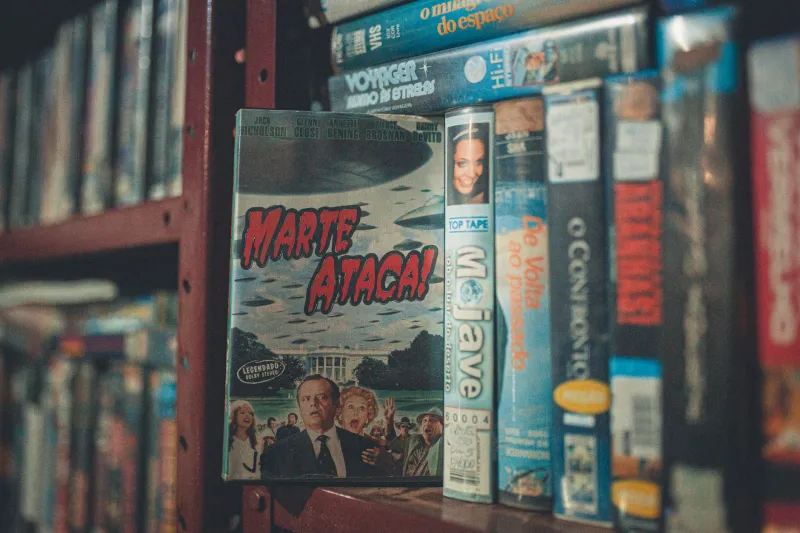
There's a specific kind of Friday night that doesn't really exist anymore. You're at Blockbuster — or maybe a regional chain, one of those places with the handwritten staff picks taped to the shelves — and you pick up a VHS case with a ridiculous tagline and an actor you half-recognize. You're not sure if it's going to be great. That uncertainty is kind of the point. You rent it anyway.
That movie was probably what the industry used to call a B-movie, or more charitably, a mid-budget genre film. It cost somewhere between $5 million and $40 million to make. It wasn't trying to launch a cinematic universe. It had one weird idea and ran with it. And it probably launched somebody's career — a director, a writer, a character actor who'd go on to be somebody's favorite performer for the next thirty years.
Those films are nearly extinct now. And streaming didn't just witness the death — it helped pull the trigger.
The Math That Killed the Middle
Here's what happened, in broad strokes. When Netflix, HBO Max, Peacock, and the rest of the streaming platforms started spending serious money on original content, they weren't really filling the gap left by mid-budget studio films. They were chasing two very different targets: prestige television and blockbuster-scale movies.
The logic is almost painfully simple when you look at it from a business perspective. Algorithms reward engagement, and engagement is easiest to manufacture at the extremes. A $200 million action spectacle keeps subscribers from canceling. A buzzy limited series wins awards and generates press. A $15 million horror movie about a grieving family in rural Montana? That's a harder sell to a board of directors.
Filmmaker and independent producer Dana Sherwood, who has spent the last decade navigating the festival circuit with mid-budget projects, put it plainly in a recent conversation: "The streamers want either something they can market as an event or something cheap enough that it doesn't matter if it flops. Anything in the middle is a risk they've decided isn't worth taking."
The data backs her up. According to a 2023 report from the USC Annenberg Inclusion Initiative, the percentage of films with budgets between $10 million and $50 million released theatrically by major studios has dropped sharply over the past decade. The theatrical marketplace is increasingly bifurcated: you get the Marvel movie or you get the micro-budget indie. The in-between has been hollowed out.
What We Actually Lost
Let's be specific about what that middle tier gave us, because it's easy to talk abstractly about "creative risk-taking" without remembering what that actually looked like on screen.
The mid-budget genre film was where directors got to experiment. John Carpenter made The Thing on a modest budget and changed horror forever. The Terminator franchise started as a scrappy sci-fi thriller, not a guaranteed blockbuster. Kathryn Bigelow cut her teeth on Near Dark before anyone handed her a major studio production. Steven Soderbergh has been making the case for mid-budget filmmaking his entire career, and even he's had to fight for it.
These weren't just career stepping stones, either. They were the films that built cult audiences — the kind of devoted, passionate viewers who watch something fifteen times and quote it at dinner parties twenty years later. Tremors. Clue. Big Trouble in Little China. Heathers. None of these were awards contenders. All of them matter more to actual movie culture than most of what's trending on any given streaming platform right now.
Beyond the nostalgia argument, there's a real practical loss. When studios stop making mid-budget films, they stop training the next generation of filmmakers on sets with real resources. The jump from a $500,000 independent debut to a $150 million studio film is brutal. The mid-budget movie was the apprenticeship.
The Streaming Paradox
Here's the genuinely frustrating part: streaming platforms have more content than any video store ever dreamed of. You can watch thousands of movies tonight. So why does it feel like there's less to discover?
Because discovery is exactly what the algorithm is designed to prevent. Recommendation engines are built to show you more of what you already like, which sounds helpful until you realize it's also the enemy of the unexpected. The B-movie thrived on the unexpected. It was the thing you grabbed because the box art was weird and you were feeling adventurous. The algorithm would never recommend it. The algorithm would never have let it get made in the first place.
Director and genre enthusiast Marcus Teller, whose debut feature screened at Fantasia Fest before landing a modest streaming deal, described the experience of pitching mid-budget projects in the current market as "trying to sell someone a really good sandwich when they've already decided they only want either a snack or a seven-course meal."
That's not hyperbole. Studio development slates are public information, and the pattern is unmistakable. IP adaptations, sequels, franchise entries, prestige biopics — and then a long, long gap before you get to anything that looks like a genuine creative swing.
Is There Any Hope?
It would be dishonest to say the mid-budget film is completely dead. A24 has built an entire brand identity around taking swings that major studios won't. Blumhouse proved that low-to-mid-budget horror can still be commercially viable. And the international film market — Korean cinema in particular — has demonstrated repeatedly that audiences will show up for original, non-franchise storytelling when it's given a real release.
But these are exceptions, and exceptions aren't an ecosystem. What's missing is the volume, the constant churn of weird, ambitious, imperfect films that gave audiences something to argue about and gave filmmakers somewhere to grow.
The streaming wars were supposed to be good for viewers. More content, more choice, more access. And in some ways, that's true. But the version of "more" we got was heavy on quantity and increasingly thin on the kind of creative diversity that actually moves cinema forward.
Somewhere out there, the next John Carpenter is making short films on a phone because there's no mid-tier rung on the ladder left to climb. That should bother us. It bothers us here.
The weird little movie deserved better. So did we.