Stop Calling It a '90s Revival — Studios Are Just Selling You Your Own Childhood
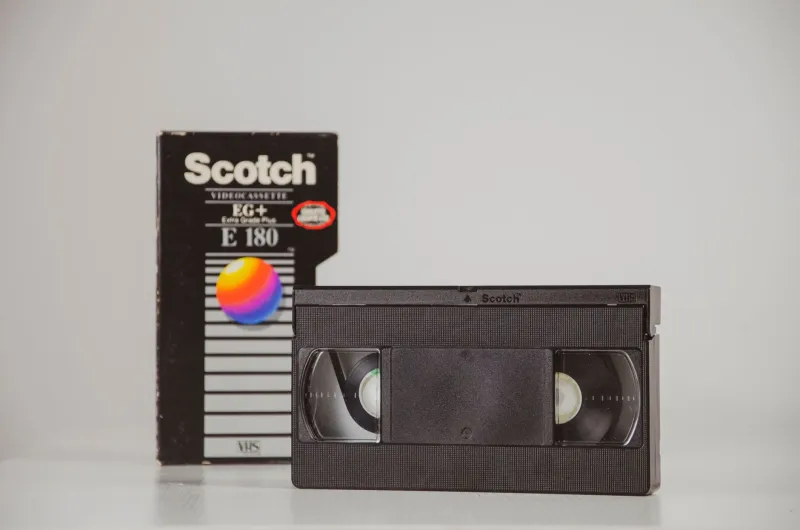
Somewhere between the rebooted sitcoms, the vintage-filter music videos, and the seemingly endless parade of films set against a backdrop of dial-up internet and Blockbuster Video storefronts, a consensus formed: the '90s are back, and we should be excited about it.
But here's the thing — the '90s never really left. They were just waiting to be monetized.
What's being marketed as a cultural revival is, in practice, something considerably less romantic. It's a calculated business strategy, refined over years of streaming data, designed to convert millennial nostalgia into subscription retention and Gen Z curiosity into ticket sales. And it's working well enough that the industry has very little incentive to interrogate it honestly.
So let's do that instead.
What a Real Revival Actually Looks Like
Before we get into the mechanics of what's happening now, it's worth establishing what a genuine creative revival looks like — because they do happen, and they look different from what we're currently experiencing.
The French New Wave wasn't a marketing campaign. Directors like Godard and Truffaut weren't packaging familiar aesthetics for an audience primed to consume them — they were actively breaking from what cinema had been and building something genuinely new. The American independent film movement of the early '90s — the one that actually produced the decade we're now supposedly reviving — emerged from filmmakers who had something to say and found new ways to say it. Clerks. Slacker. Boyz n the Hood. Daughters of the Dust. These weren't brands. They were ruptures.
What streaming platforms are currently packaging as a '90s revival is almost entirely the opposite of that energy. It's the careful reproduction of surface-level aesthetics — the fashion, the soundtrack cues, the color grading — without any of the underlying restlessness that made the original decade cinematically interesting.
The Millennial Nostalgia Machine
Here's a quick list of what the current wave of '90s-flavored content actually has in common:
- Recognizable IP or adjacent concepts that require minimal explanation to an audience already familiar with the source material
- Aesthetic signifiers (VHS grain, neon lighting, specific music licensing) deployed as shorthand for emotional authenticity
- Marketing campaigns that lean heavily on the phrase "for the fans" while targeting a demographic that is now in its 30s and 40s with disposable income
- Minimal narrative risk — stories that feel nostalgic precisely because they don't challenge the assumptions baked into the original properties
This isn't creative revival. It's brand extension. And the distinction matters, because brand extension is explicitly designed to avoid the kind of creative disruption that produces genuinely memorable cinema.
The millennial generation — roughly speaking, people born between the early '80s and mid-'90s — came of age during a period of real cinematic vitality. That vitality shaped their taste and their emotional relationship to film. Streaming platforms figured out, through extensive data analysis, that triggering those emotional associations is an extremely effective retention tool. The goal isn't to make a great movie. The goal is to make a movie that feels like the great movies you already loved, reliably enough that you keep your subscription active.
What Gen Z Is Actually Getting
There's a secondary layer to this conversation that doesn't get enough attention: the role of Gen Z audiences in the nostalgia economy. Born in the mid-to-late '90s and early 2000s, this demographic didn't actually experience the cultural moment being referenced — they're engaging with it secondhand, filtered through the preferences and memories of older millennials.
This creates an interesting dynamic. For Gen Z, the '90s aesthetic isn't nostalgic in the traditional sense — it's more like inherited mythology. They're drawn to it partly because it's been so thoroughly aestheticized by the culture around them, and partly because genuinely original contemporary content is increasingly hard to find.
In other words: when the alternative is a streaming library full of algorithmic content designed to offend nobody and surprise nobody, a well-produced piece of '90s nostalgia can feel almost transgressive by comparison. It at least has a personality. That personality was borrowed from somewhere else, but it's still more distinctive than a lot of what surrounds it.
What's Worth Watching Anyway
None of this means everything with a '90s flavor is automatically worthless. Some of it is genuinely fun, and fun matters. A few titles have used the nostalgia framework to sneak in something more substantive:
- Films that engage critically with the period rather than just celebrating it — interrogating what the '90s actually meant for people who weren't white, suburban, and middle-class
- Projects where the aesthetic choice serves a genuine narrative purpose rather than functioning as pure marketing signal
- Work by directors who lived through the era and are using that framework to process something real, rather than simply replicating surfaces
The test is simple: does the '90s setting or aesthetic serve the story, or does the story exist primarily as a vehicle for the aesthetic? When it's the former, you might be watching something worth your time. When it's the latter, you're watching a very expensive mood board.
The Honest Version of This Conversation
The entertainment industry is not obligated to be creatively adventurous. It's a business, and nostalgia is a proven revenue driver. There's no scandal in acknowledging that.
The scandal — if we want to call it that — is the insistence on framing commercial calculation as cultural renaissance. Calling it a revival implies that something was lost and has now been recovered. What's actually happening is that something profitable has been identified and is being systematically extracted.
The real '90s revival would look like a generation of filmmakers making something new that their contemporaries can't yet name or categorize — the way the original decade's best work felt at the time. Messy, unpolished, and genuinely uncertain about where it was going.
That's not what's on your streaming queue right now. But it's out there, somewhere, waiting for someone to find it.